Queer Places:
King Edward's School, Edgbaston Park Rd, Edgbaston, Birmingham B15 2UA, United Kingdom
University of Oxford, Oxford, Oxfordshire OX1 3PA
St. Lawrence Churchyard, St Lawrence Terrace, Warkworth, Morpeth NE65 0XP, United Kingdom
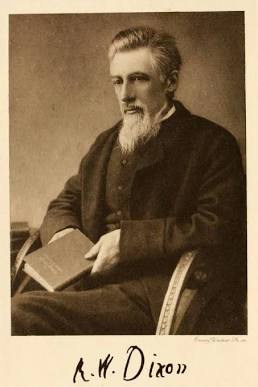 Richard Watson Dixon (May 5, 1833 – January 23, 1900) was an English poet, Anglican clergyman, and church historian whose life stood at the intersection of Victorian
religious devotion and the avant-garde aestheticism of the Pre-Raphaelite circle.
Richard Watson Dixon (May 5, 1833 – January 23, 1900) was an English poet, Anglican clergyman, and church historian whose life stood at the intersection of Victorian
religious devotion and the avant-garde aestheticism of the Pre-Raphaelite circle.
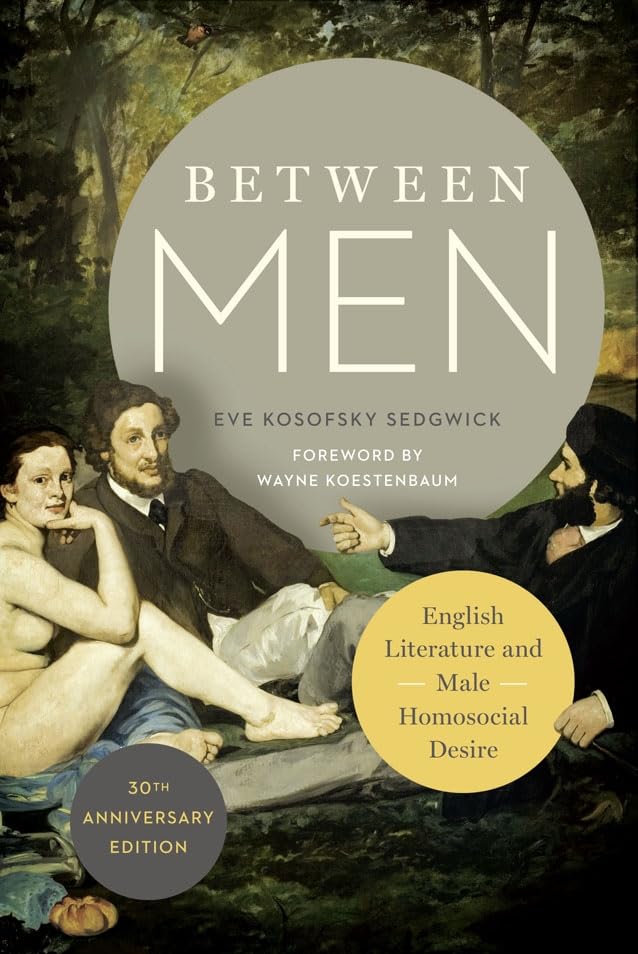
While Dixon married twice in his later life (first to Maria Partington in 1861, and after her death, to Matilda Rouse in 1882), scholars and queer literary historians
frequently analyze his life through the lens of 19th-century homosociality, Victorian male romance, and queer literary networks.
Born in Islington, London, Dixon attended King Edward’s School, Birmingham, under Dr. James Prince Lee and Dr. Edwin
Gifford.
Entering Pembroke College, Oxford, in 1851, Dixon reconnected with his school friend Edward Burne-Jones. Together with
William Morris, Cormell Price, and
William Fulford, they formed an intense, close-knit, all-male artistic community dedicated to medievalism, poetry, and chivalric
idealism.
Dixon contributed poetry to the group's Oxford and Cambridge Magazine (1856) and assisted Dante Gabriel Rossetti,
William Morris, and Burne-Jones in painting the Arthurian murals on the walls of the Oxford Union library in 1857.
Ordained in 1858, Dixon balanced parish duties in Carlisle, Hayton, and Warkworth with writing his monumental six-volume History of the Church of England. While teaching
at Highgate School in 1861, he taught a young Gerard Manley Hopkins, sparking a lifelong literary mentorship and
correspondence.
In 19th-century Britain, before the modern concept of "queer identity" crystallized, passionate male friendships and artistic brotherhoods occupied a distinct cultural
space. Dixon’s life provides several touchpoints for modern LGBTQ cultural history:
The Oxford Brotherhood was characterized by romanticized, deeply emotional bonds between young men. Influenced by John Ruskin and
Alfred Lord Tennyson's In Memoriam, members expressed intense affection, shared living quarters, and wrote poetry celebrating
idealized male comradeship and chivalric devotion.
Dixon played a pivotal role in the life of Gerard Manley Hopkins—a poet whose work is widely analyzed for its covert homoerotic imagery and intense struggle between
spiritual duty and physical/sensual desire.
When Hopkins was isolated within the Jesuit order and had abandoned publishing his poetry, Dixon was one of the very few correspondents (alongside
Robert Bridges) who recognized Hopkins's genius, passionately encouraging him to keep writing.
Scholars often place the Dixon–Hopkins–Bridges triangle at the core of a Victorian network where male intimacy and poetic sensitivity were fostered outside mainstream
heterosexual norms.
The Pre-Raphaelite circle challenged rigid Victorian gender norms through art and poetry that emphasized sensory experience, male vulnerability, and fluid beauty. Dixon’s
poetry often reflected these aesthetic ideals, exploring themes of spiritual longing, loss, and idealized love.
Richard Watson Dixon is buried in the churchyard of St Lawrence’s Church in Warkworth, Northumberland, where he served as vicar from 1883 until his death.
References:
Other references:
- The Letters of Gerard Manley Hopkins and Richard Watson Dixon (Edited by Claude Colleer Abbott, Oxford University Press, 1935)
- The Life of William Morris (Written by J. W. Mackail, Longmans, Green and Co., 1899)
- Pre-Raphaelite Brotherhood & Aestheticism Studies
- Gerard Manley Hopkins: A Very Private Life (By Robert Bernard Martin, HarperCollins, 1991)
- Critical Studies on 19th-Century Male Friendships & Poetry
Support this project
This website is a passion project researched, developed, and funded entirely by me. If you find the content valuable and would like to help support the ongoing research and hosting costs, any contribution is deeply appreciated.
Thank you for keeping this independent resource alive!
My books on Amazon: Elisa Rolle's books
BACK TO HOME PAGE